
 By Admin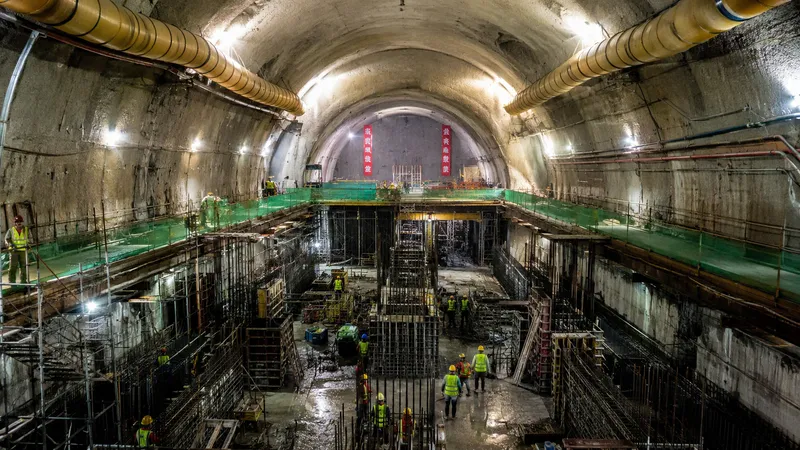
In modern warfare, visibility is vulnerability. As surveillance technologies evolve—from satellites to AI-driven reconnaissance—nations are rethinking how and where they build their military infrastructure. One of the most fascinating and strategically critical developments is China Underground Military Hub Construction.
Over the past two decades, China has quietly invested in vast underground facilities designed to protect, conceal, and sustain military operations even under extreme conditions. These underground hubs are not just bunkers—they are sophisticated, interconnected ecosystems that could redefine how wars are fought and won.
From reinforced missile silos to hidden command centers deep beneath mountains, China’s underground strategy represents a shift toward resilience, secrecy, and long-term survival.
What Is China Underground Military Hub Construction?
At its core, China Underground Military Hub Construction refers to the development of fortified subterranean military bases designed to house troops, weapons, command systems, and logistical infrastructure.
These hubs often include:
- Missile storage and launch systems
- Command and control centers
- Aircraft hangars and drone facilities
- Underground transport tunnels
- Emergency supply reserves
Unlike traditional bases, these facilities operate beneath layers of rock, concrete, and engineered shielding—making them extremely difficult to detect or destroy.
Why China Is Investing in Underground Military Infrastructure
1. Protection Against Advanced Surveillance
Modern satellites can detect even minor surface changes. Underground hubs provide natural concealment.
Expert Insight:
Military analysts estimate that over 70% of global reconnaissance capabilities rely on surface-level detection. Going underground dramatically reduces exposure.
2. Nuclear and Missile Security
China maintains a growing nuclear arsenal. Protecting these assets is critical.
Underground facilities:
- Shield weapons from first-strike attacks
- Allow hidden movement of missiles via tunnels
- Enable surprise retaliation strategies
A well-known example is China’s “Underground Great Wall,” a vast tunnel network believed to span thousands of kilometers.
3. Strategic Deterrence
Hidden infrastructure creates uncertainty for adversaries.
When enemies cannot locate or assess military assets accurately, they hesitate. This uncertainty strengthens deterrence without firing a single shot.
4. Continuity of Command
In a worst-case scenario—such as cyber warfare or nuclear conflict—surface infrastructure may fail.
Underground hubs ensure:
- Secure communication networks
- Backup command centers
- Long-term operational capability
This redundancy is a cornerstone of modern military planning.
Key Features of China’s Underground Military Hubs
Advanced Engineering and Design
These facilities are not simple bunkers. They involve:
- Reinforced concrete and steel layers
- Shock-absorption systems
- Blast-resistant doors
- Electromagnetic shielding
Some are built inside mountains, using natural geology as an added defense layer.
Integrated Transport Networks
Many underground hubs connect through hidden tunnels.
These allow:
- Movement of troops and equipment
- Secure logistics without surface exposure
- Rapid deployment across regions
In some cases, tunnels are large enough to transport missile launch vehicles.
AI and Smart Systems
China integrates AI into its military infrastructure.
Capabilities include:
- Automated threat detection
- Real-time system monitoring
- Autonomous defense responses
Designer’s Advice:
Future military hubs will rely heavily on AI to reduce human error and increase response speed during critical moments.
Energy Independence
Underground hubs often include:
- Backup power systems
- Renewable energy integration
- Long-term fuel storage
This ensures operations can continue even during prolonged conflicts.
Real-World Examples and Developments
The “Underground Great Wall”
This massive tunnel system is one of the most discussed elements of China’s underground strategy.
- Estimated length: 3,000–5,000 km
- Purpose: Nuclear missile storage and mobility
- Location: Primarily in northern China
Although details remain classified, satellite imagery and defense reports suggest extensive expansion over time.
Mountain-Based Airbases
China has constructed airbases carved into mountains, especially in coastal regions.
These bases:
- Hide fighter jets and bombers
- Provide rapid launch capability
- Offer protection against missile strikes
Such designs combine natural terrain with advanced engineering.
Naval Underground Facilities
Some reports indicate the existence of underground submarine pens and naval hubs.
These allow submarines to:
- Enter and exit discreetly
- Avoid satellite detection
- Prepare for missions in secrecy
How China Compares to Other Nations
China is not alone in underground military development, but its scale stands out.
United States
- Maintains underground command centers (e.g., Cheyenne Mountain)
- Focuses more on mobility and global reach
Russia
- Extensive bunker systems from the Cold War
- Strong emphasis on nuclear survivability
China’s Advantage
China combines:
- Large-scale construction
- Modern AI integration
- Strategic geographic planning
This creates a hybrid approach that blends old-school fortification with cutting-edge technology.
Challenges and Limitations
Despite its advantages, China Underground Military Hub Construction faces several challenges:
High Costs
Building underground is significantly more expensive than surface construction.
- Excavation costs
- Structural reinforcement
- Maintenance complexity
Geological Constraints
Not all regions support underground development.
- Risk of earthquakes
- Water infiltration
- Structural instability
Detection Technologies
While underground hubs are harder to detect, they are not invisible.
Advanced technologies like:
- Ground-penetrating radar
- Thermal imaging
- Seismic monitoring
can still provide clues about underground activity.
The Future of Underground Warfare
Increased Automation
Future hubs will likely rely more on:
- Autonomous drones
- Robotic maintenance systems
- AI-driven command centers
Deeper and More Complex Networks
Expect deeper facilities with multi-layered designs.
These will:
- Increase survivability
- Enhance secrecy
- Support larger operations
Integration with Space and Cyber Warfare
Underground hubs will connect with:
- Satellite systems
- Cyber defense networks
- Electronic warfare platforms
This integration will create a fully connected defense ecosystem.
Practical Implications for Global Security
China’s underground strategy is reshaping global military thinking.
For Defense Analysts
Understanding underground infrastructure is now critical for:
- Threat assessment
- Strategic planning
- Intelligence gathering
For Other Nations
Countries may respond by:
- Building their own underground systems
- Developing better detection technologies
- Investing in precision strike capabilities
For Civilians
While these developments seem distant, they influence:
- National security policies
- Defense budgets
- Global stability
Expert Perspective: Why Underground Is the Future
From a strategic standpoint, underground construction solves one major problem: survivability.
In an era where missiles can reach targets within minutes and satellites watch every move, going underground offers a rare advantage—time.
Time to respond.
>Time to recover.
>Time to retaliate.
That advantage can determine the outcome of conflicts.
Quick Summary Table
| Aspect | Key Insight |
|---|---|
| Core Concept | Hidden, fortified underground military hubs |
| Main Purpose | Protection, secrecy, and strategic deterrence |
| Key Features | AI systems, tunnels, reinforced structures |
| Major Example | Underground Great Wall |
| Advantages | Survivability, stealth, continuity |
| Challenges | Cost, geology, detection risks |
| Future Trends | Automation, deeper networks, cyber integration |
Final Thoughts
China Underground Military Hub Construction is more than a defense strategy—it’s a glimpse into the future of warfare.
As technology continues to evolve, the battlefield is no longer just land, sea, air, or space. It now extends deep beneath the earth’s surface.
And in that hidden world, the rules of engagement are being rewritten.
Understanding this shift isn’t just important for military experts—it’s essential for anyone trying to grasp the future of global power dynamics. For more information, visit our website.